

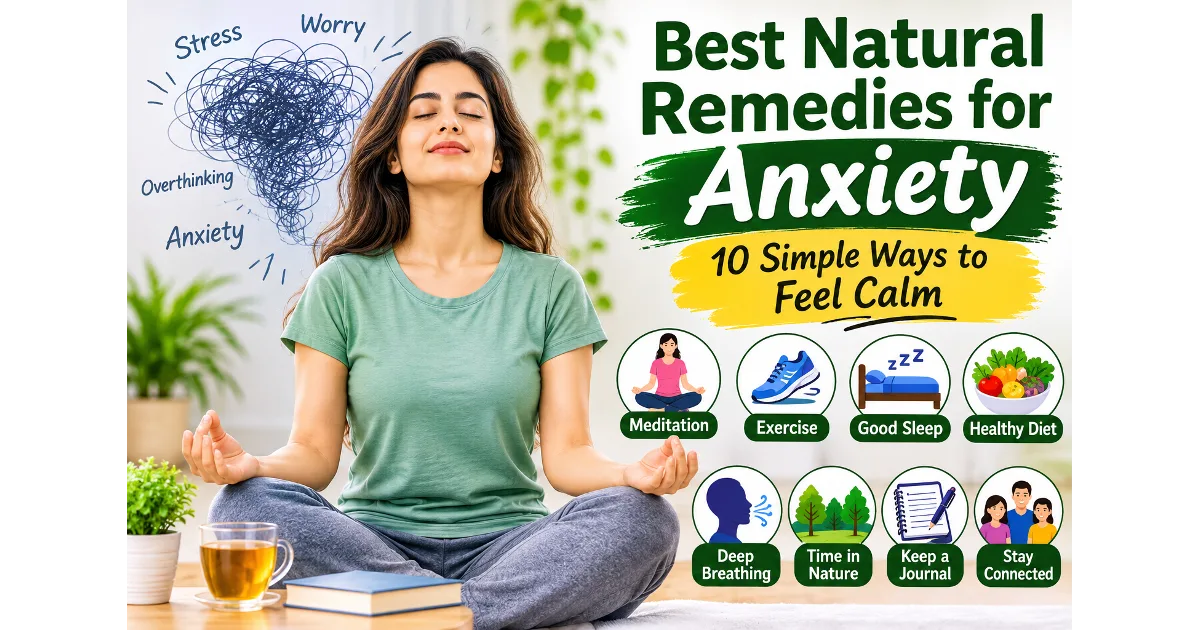
Best Natural Remedies for Anxiety: 10 Simple Ways to Feel Calm
Anxiety is a common experience that can affect people of all ages. Everyday stress, work pressure, personal challenges, and uncertainty can sometimes make you feel nervous, restless, or overwhelmed. Common symptoms include excessive worrying, difficulty sleeping, a racing heartbeat, and trouble concentrating.
Although occasional anxiety is normal, developing healthy habits can help you manage stress and support emotional well-being. Here are 10 natural ways to feel calmer and improve your daily routine.
1. Practice Deep Breathing
Deep breathing is a simple relaxation technique. Slowly breathe in through your nose and gently breathe out. Practicing for five minutes may help you feel more relaxed during stressful moments.
Continue Reading
2. Try Meditation
Meditation and mindfulness encourage you to focus on the present moment instead of worrying about the past or future. Start with five to ten minutes every day.
3. Exercise Regularly
Walking, cycling, swimming, and yoga can support mental and physical health. Regular physical activity may improve mood and help reduce stress.
4. Get Enough Sleep
Poor sleep can make anxiety symptoms harder to manage. Maintain a regular sleep schedule and aim for at least seven hours of sleep each night.
5. Reduce Caffeine
Coffee, energy drinks, and strong tea contain caffeine, which may increase nervousness or a racing heartbeat in some people. Reducing caffeine may help if you are sensitive to it.
6. Eat Healthy Foods
A balanced diet supports overall health. Include fruits, vegetables, whole grains, nuts, seeds, and protein-rich foods in your daily meals.
7. Spend Time Outdoors
Walking in a park, gardening, or enjoying fresh air may help you relax and improve your mood.
8. Write Down Your Thoughts
Keeping a journal can help you understand your feelings and identify situations that trigger stress. Writing regularly may also help organize your thoughts.
9. Connect With Loved Ones
Talking with trusted friends and family members can provide emotional support. Sharing your worries may help you feel understood and less alone.
10. Practice Yoga
Gentle yoga combines movement, breathing, and relaxation. It may help reduce physical tension and support emotional well-being.
When Should You Seek Professional Help?
Natural self-care methods can support everyday stress management, but they are not a substitute for professional treatment. If anxiety regularly affects your sleep, work, relationships, or daily activities, consider speaking with a qualified healthcare professional. Treatments such as cognitive behavioral therapy (CBT) can be helpful.
Avoid taking herbal supplements without medical advice because they may cause side effects or interact with medications.
Final Thoughts
Managing anxiety often involves small, consistent lifestyle changes. Deep breathing, meditation, exercise, healthy eating, and proper sleep can support better mental well-being. Remember that asking for professional help is a positive step when anxiety becomes difficult to manage.